Search

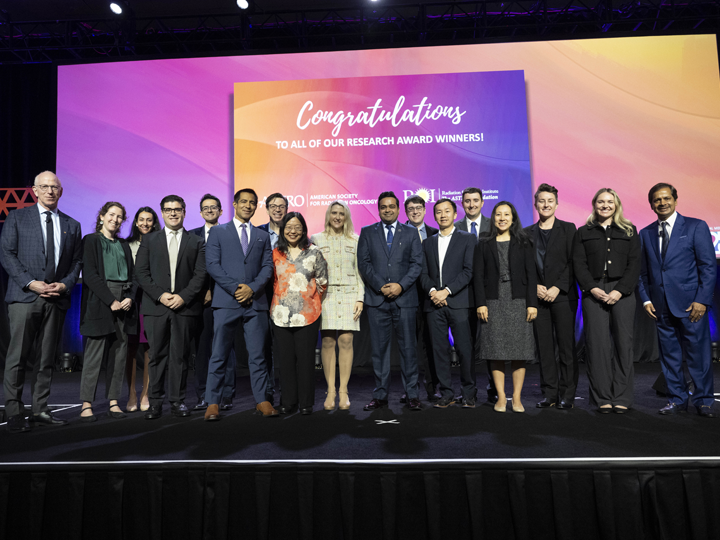
Grants support 14 scientists, including several awards cosponsored by leading cancer research partners.
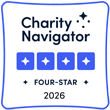
Speed of Light – The ASTRO Foundation has earned a 4-star rating from Charity Navigator, the highest distinction awarded by the nation's leading independent nonprofit evaluator, recognizing the Foundation's financial health, accountability, and commitment to its mission. This milestone reflects the rigorous standards the Foundation upholds in stewarding donor resources and advancing research and education in radiation oncology.
The Foundation also proudly maintains its Platinum rating from Candid — a distinction it has now earned for four consecutive years — reaffirming its enduring commitment to transparency and organizational excellence.
Cancer research doesn't just advance science: it saves live. While May is recognized as National Cancer Research Month, we are advancing cancer research every day because we believe every person should have access to the best radiation therapy to life a longer, healthier life.
We are proud to stand alongside the researchers, clinicians, and advocates working to advance cancer science and improve outcomes for patients. The Foundation's grants and fellowships fuel the next generation of innovation in radiation oncology — from expanding access to treatment to uncovering the full potential of radiation's role in cancer care. This month, we celebrate the work that makes progress possible.
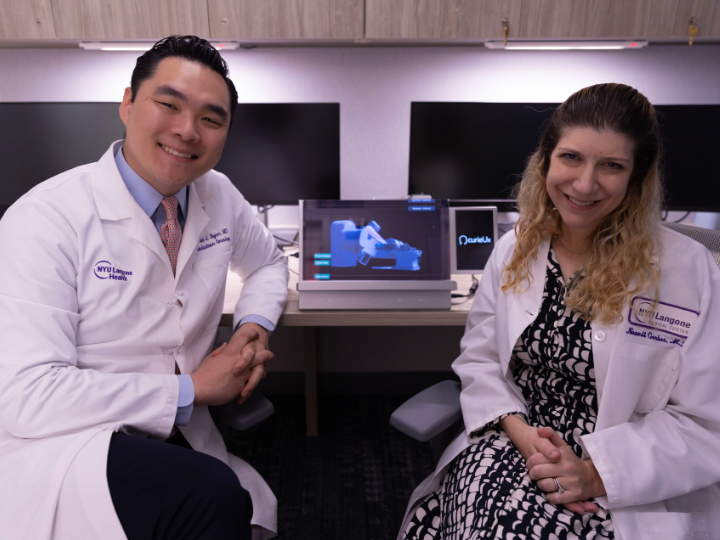
David Byun, MD, Naamit Gerber, MD, and their colleagues recently published results showing that Curietherapy User eXperience (CurieUx), an augmented reality educational tool, reduces patient anxiety and promotes radiation knowledge among patients with breast cancer preparing for radiation therapy. Dr. Byun received a grant from the Foundation in 2019 to develop and test CurieUx, an interactive 3-dimensional hologram display with animated modules on patient-specific anatomy, simulation, linear accelerator, and positioning that providers can use during consultation. Read the article in the International Journal of Radiation Oncology, Biology, Physics.

Joseph Harms, PhD, and his colleagues recently published findings about the system they are developing to verify the accuracy of the radiation dose and dose rate during proton FLASH radiation therapy. Building on results published in several prior manuscripts, the team showed that the high-resolution scintillation imaging dosimetry system effectively identifies simulated beam delivery errors. The development of the new system was supported in part by a 2023 grant from the Foundation led by Dr. Harms. Read the article in Medical Physics.
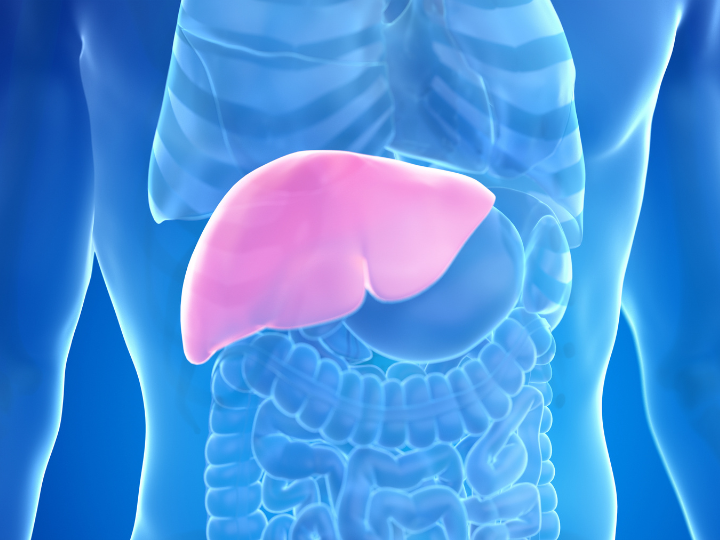
Nima Nabavizadeh, MD, and his colleagues recently published results from their prospective pilot clinical trial evaluating whether stereotactic body radiation therapy (SBRT) is a safe and effective bridge to transplant for patients with hepatocellular carcinoma and advanced cirrhosis, a high-risk population that is largely excluded from other bridging therapies and prone to progressing outside transplant criteria. Two-thirds of the patients in the trial either received a liver transplant or were still eligible one year after SBRT. Dr. Nabavizadeh received a grant from the Foundation in 2018 to conduct the trial, one of the first of its kind. Read the article in the International Journal of Radiation Oncology, Biology, Physics.
Patients and providers can now download guides in the “Communicating the External Beam Radiotherapy Experience” (CEBRE) series from the Foundation’s website. Created by Daniel Golden, MD, MHPE, and Tomoko Ichikawa, MS, the CEBRE guides explain radiation therapy using graphic narrative. The team developed CEBRE guides focused on breast, central nervous system, digestive system, head and neck, lung and prostate cancers with support from Speed of Light – The ASTRO Foundation, which are available in English and Spanish. Download the CEBRE guides.
January 1, 2026 marked the relaunch of ASTRO’s foundation with a renewed focus, a clearer identity, and an even greater sense of possibility. The organization also proudly carries a new name and a new promise: Speed of Light – The ASTRO Foundation. Read more about the transformation in a message from Gita Suneja, MD, MSHP, FASTRO, President of the Foundation’s Board of Trustees.