Search

Treatment Team

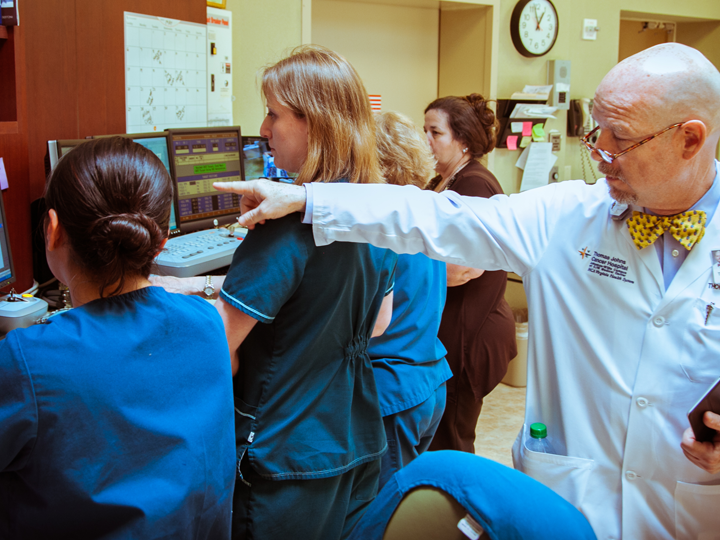
While you undergo radiation therapy, a team of highly trained medical professionals will be working together to make sure you receive the best possible care. Radiation oncologists are the doctors who oversee the care of each person undergoing radiation treatment. Other members of the treatment team include radiation therapists, radiation oncology nurses, medical physicists, dosimetrists, social workers and nutritionists.

Radiation Oncologists

Radiation oncologists are the doctors who will oversee your radiation therapy treatments. These doctors work with the other members of the radiation therapy team to develop your treatment plan and ensure that each treatment is given safely and accurately. Your radiation oncologist will also monitor your progress and adjust the treatment as necessary to make sure the radiation is hitting its target while minimizing side effects.

Before, during and after your radiation therapy treatments, your radiation oncologist works closely with other cancer doctors such as medical oncologists and surgeons to maximize the effectiveness of your radiation treatment plan.

  • Radiation oncologists are the only doctors with the expertise and training to safely prescribe and oversee radiation therapy treatments as well as manage side effects.
  • In addition to college and medical school, five years of additional training through residency are required for radiation oncologists. Your team may include these radiation oncologists in training.
  • Radiation oncologists are board certified through the American Board of Radiology.
  • You will meet with your radiation oncologist for your initial consultation, your planning session and weekly visits.

Radiation Therapists

Radiation therapists work under the supervision of radiation oncologists to administer your daily radiation treatment. Radiation therapists will also help to set up your initial planning session with specific treatment devices for your treatment.

  • Radiation therapists go through a two- to four-year educational program following high school or college. By passing a special examination, radiation therapists may be certified by the American Registry of Radiologic Technologists.
  • You will spend time with the radiation therapy team at each of your treatments.
  • For more information on radiation therapists, contact the American Society of Radiologic Technologists at www.asrt.org.

Radiation Oncology Nurses/Nurse Practitioners and Medical Assistants

Radiation oncology nurses and medical assistants work with every member of the treatment team to care for you and assist your family before, during and after treatment. They explain the possible side effects you may experience and describe how you can manage them.

  • Nurses and medical assistants assess how you are doing throughout treatment and can help you cope with the changes you are experiencing.
  • Many registered nurses in radiation therapy have earned additional certification in the specialty of oncology nursing, and these nurses hold the OCN (Oncology Certified Nurse) designation.
  • Advanced practice nurses, including clinical nurse specialists and nurse practitioners, have completed a master's degree program.
  • For more information on oncology nursing, contact the Oncology Nursing Society at www.ons.org.

Medical Physicists

Qualified medical physicists work directly with the radiation oncologist during treatment planning and delivery. They oversee the work of the dosimetrists and help ensure that complex treatments are properly tailored for each patient.

  • Medical physicists are responsible for developing and directing quality control programs and ensuring safe and precise treatment deliveries.
  • The medical physicist ensures equipment remains safe and correctly calibrated, and that radiation dose determinations are accurate. They ensure equipment and procedures are in compliance with state and federal regulations and up-to-date standards.
  • Physicists can be involved in research and development to improve radiation oncology techniques.
  • Medical physicists have a graduate degree in medical physics, physics or engineering. To be eligible for board certification by the American Board of Radiology, they must also complete a multi-year residency in an accredited residency program.
  • For more information on medical physicists, contact the American Association of Physicists in Medicine at www.aapm.org.

Dosimetrists

Dosimetrists work with the radiation oncologist and medical physicist to develop an optimized treatment plan that best destroys the tumor while sparing healthy tissue. They calculate the dose of radiation to make sure the tumor gets the prescribed amount. These professionals require advanced training to create expert radiation plans.

  • Many dosimetrists have experience as radiation therapists and then, with intensive training, become dosimetrists. Others are graduates of one- to two-year dosimetry training programs.
  • Dosimetrists are certified by the Medical Dosimetrist Certification Board.
  • Contact the American Association of Medical Dosimetrists at www.medicaldosimetry.org for more information.

Other Health Care Providers

The treatment team also includes other medical professionals who will assist you with additional needs during your treatment.

Social Workers

Social workers are available to provide a variety of supportive services to you and your family. They can provide counseling to help you and your family cope with the diagnosis of cancer and with your treatment. Along with other members of the team, they are frequently involved in support groups. They may also help arrange for home health care, transportation, financial support, emotional support and other services.

Nutritionists/Dietitians

Nutritionists or dietitians will work with you to help you maintain a healthy diet during treatments. They will help you modify your diet if the side effects of treatment are affecting your appetite, help you identify what you should eat, and can provide recipes, menu suggestions and information on ready-to-use nutritional supplements. They also can address dietary issues and current developments that may affect cancer treatment outcomes.

Physical Therapists

Physical therapists use therapeutic exercises to ensure that your body functions properly before, during and/or after treatment. These exercises are used to help manage side effects, alleviate pain and keep you healthy.

Dentists

Dentists may be involved in your care if you are receiving radiation for cancers of the mouth, throat or neck. Dentists may recommend that you have preventive dental work prior to radiation, and they will also help you manage the oral effects of cancer therapy such as dry mouth or tooth or denture problems.

Reception/Front Desk Staff

Members of the reception/front desk staff are an important part of the team. They will greet you daily when you check in for your treatments and appointments. They may also help schedule your consultations and follow-up appointments, as well as coordinate your treatment times.


251 18th Street South, 8th Floor
Arlington, VA 22202