Search

In many cases, your cancer will need to be treated by using more than one type of treatment. If you are diagnosed with a sarcoma, you might have surgery to remove the tumor (by a surgeon), then have radiation therapy to destroy any remaining cancer cells in or near your where your sarcoma was removed. Alternatively, you might have radiation therapy before surgery in order to shrink the sarcoma and make it easier for the surgeon to remove the tumor. This radiation can be given to the whole tumor and a small area around the sarcoma. You also might receive chemotherapy (by a medical oncologist) to destroy cancer cells that may have traveled to other parts of the body.
After reviewing your medical record including imaging, as well as completing a thorough patient history and physical examination, your radiation oncologist will discuss with you the potential benefits and risks of radiation therapy and answer your questions. For a list of questions that you may want to ask, please see the section Questions to Ask Your Doctor.
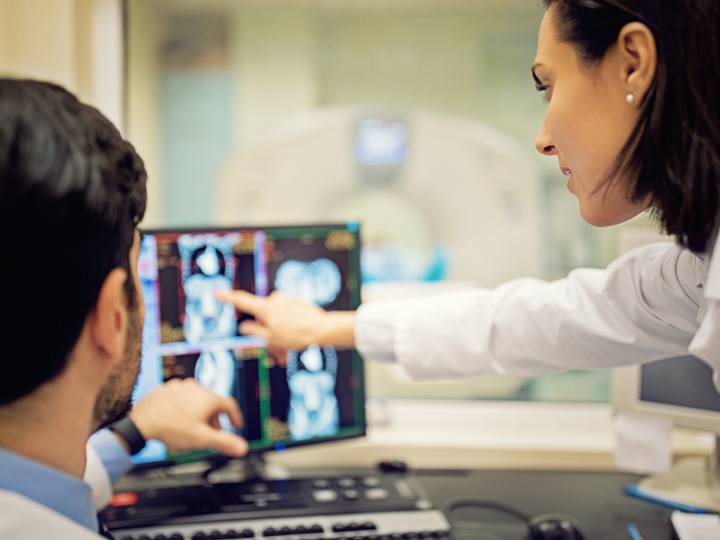
Your sarcoma diagnosis will be reviewed by a cancer care team, called a multidisciplinary team, including a radiation oncologist, surgeon, medical oncologist, pathologist and radiologist. Together they will determine the best treatment recommendation for you.
If your care team recommends you consider radiation therapy as part of your treatment plan, you will meet with a radiation oncologist, or radiation doctor. They will design your radiotherapy plan and lead the treatment team. You may also be seen by a medical student, a resident physician (radiation oncology doctor in training), a nurse practitioner or a physician’s assistant. You may also have a nurse coordinator who will help you with appointments, next steps, side effects and anything else you may find helpful through treatment. Many other team members participate in creating and delivering radiation therapy including a dosimetrist (like a pharmacist for radiation) and a medical physicist, who helps with the safety and quality of the radiation treatments. Radiation therapists are technical specialists in positioning patients so they can receive accurate daily radiation treatments in a comfortable way. All of these team members are here for you and are committed to your success.
During your first visit, your doctor will talk with you about whether radiation therapy will be helpful in treating your disease. This includes reviewing your current medical history, past medical history, past surgical history, family history, medications, allergies, lifestyle and current symptoms. A physical exam will help to assess the extent of your disease and assess your general physical condition. Your medical record will be reviewed including any medical images and blood work. During your visit, the radiation oncologist will explain important details about your sarcoma, the recommended treatment, the radiotherapy process, and the expected side effects. If you decide to receive radiation therapy, you will sign a consent form and undergo a preparatory step called a CT simulation, or “mapping.”
Radiation therapy plans are very precise and each treatment must be very accurate. During CT simulation, radiation therapists will position your body and tumor so that you are comfortable holding still for daily radiation treatments. Radiation therapists may make marks on your body with temporary ink or a set of tiny, permanent tattoos. Additionally, they may create body casts, masks, headrests, or other devices to help get you in to the same position for each radiation treatment. They may also create blocks (shields) that can be used to protect parts of your body during treatment.
Once you are positioned, a CT scan (“CAT scan”) is performed. Other scans such as an MRI may also be performed. Since they are just used for radiation treatment planning, there is usually no report from these scans. The radiation oncologist and his/her team then use a sophisticated treatment-planning computer to design the best possible personalized radiation plan. After reviewing the plan, your radiation oncologist will write a prescription that outlines exactly how much radiation you will receive, how often, and to what parts of your body.
After your radiation oncologist approves the radiation therapy plan and prescribes treatment, medical physicists and their team review the plan for safety and quality. They may also perform a "dry run" on the radiotherapy machine to ensure that the treatment can be delivered precisely and accurately. Once all of this is confirmed, treatment can begin.
When you undergo external beam radiation therapy treatment, you will be positioned on the treatment table of a radiation therapy machine, usually a Linear Accelerator or “Linac.” Radiation therapists may refer to the treatment table as a “couch.” The treatment head of the Linac directs a radiation beam at your tumor. Radiation therapy is painless, like an X-ray or CT scan. As such, patients usually don’t need to stay in the hospital and may even work throughout treatment.
A radiation therapy course usually consists of short, daily treatments delivered by your radiation therapists. Each treatment, the therapist will bring you in to the treatment room. Once you are positioned correctly, the therapist will leave the treatment room and begin your treatment. During your treatment, your therapist will closely monitor you on a television screen. There is a microphone in the treatment room so you can always speak with the therapist if you have any concerns. Before the treatment begins, the radiation therapists may move the treatment machine and treatment table to deliver your personalized radiotherapy plan. The machine might make noises during treatment that sound like clicking, knocking or whirring, but the radiation therapist is in complete control of the machine at all times. The machine can be stopped at any time for any reason, such as if you are feeling sick or uncomfortable. Time spent in the treatment room will vary depending on the type of radiation. After treatment, the radiation therapists will help you off of the table and out of the treatment room.
Your radiation oncologist monitors your daily treatments and may alter your radiation dose based on these observations. Also, your doctor may recommend blood tests and imaging to see how your body is responding to treatment. If the tumor shrinks or if your body changes significantly, a change to the treatment plan may be required based on the changes to the tumor or your body.
It is best not to miss scheduled treatments, but sometimes a course of treatment may need to be interrupted for a day or more. This may happen if you develop side effects that require a short treatment break. Unscheduled machine maintenance may also cause a missed daily treatment. These missed treatments may be made up by altering the schedule.
Treatment courses for sarcoma can vary, from a single treatment up to even 35 treatments. The number of radiation treatments you will need depends on the size, location and type of cancer you have, the goal of treatment, your general health and other medical treatments you may be receiving. If brachytherapy is used (which is radiation that is inserted into the body), the treatment length can be shorter. Treatments are usually scheduled five days a week, Monday through Friday.
In some cases, you may receive chemotherapy and radiation therapy at the same time. The chemotherapy may be delivered daily, weekly, every three weeks or at an alternate schedule determined by the medical oncologist together with the radiation oncologist. The chemotherapy may work to make the radiation therapy more effective at killing cancer cells. Chemotherapy also travels throughout the body to help destroy or reduce microscopic cancer cells that are too small to see. This may help keep the cancer from having a chance to spread. Your treatment team will help coordinate these therapies and care for potential side effects.
During radiation therapy, your radiation oncologist and nurse will see you regularly to follow your progress, determine whether you are having any side effects from treatment, recommend treatments for those side effects (such as medication) and address any concerns you may have. Your doctor may also make changes in the schedule or treatment plan depending on your response or reaction to the therapy. Your radiation oncology team will gather on a regular basis with other healthcare professionals to review your case to ensure your treatment is proceeding as planned. During these sessions, all the members of the team discuss your progress and any concerns.
During your course of treatment, correct positions of the treatment beams will be regularly verified with images made using the treatment beam itself. These images represent an important quality check but do not evaluate the tumor itself. Depending upon what kind of treatment you receive and what your doctor thinks will work best, the type of images used (e.g., X-ray, CT scan, ultrasound, etc.) may vary. These images assure your radiation oncologist that the treatment setup accurately matches the intended target. A medical physicist may also review your treatments every week to ensure they are being delivered correctly.
After treatment is completed, follow-up appointments will be scheduled so that your radiation oncologist can make sure your recovery is proceeding normally. Your radiation oncologist, in concert with other members of your team, may order additional imaging tests. Reports on your treatment may be sent to the other doctors helping treat your cancer. Continued follow-up in the radiation oncology clinic is recommended to evaluate for long-term side effects of radiation therapy and to ensure that the cancer does not return. As time goes by, the number of times you need to visit your radiation oncologist throughout the year will decrease. However, you should know that your radiation oncology team will always be available should you need to speak to someone about your treatment.
After treatment is completed, your radiation oncologist and their team will make sure your recovery is proceeding normally. Your radiation oncologist, in coordination with other members of your team, may order additional imaging tests. Reports on your treatment may be sent to the other doctors helping treat your cancer. Your radiation oncology team will discuss recommended follow-up to evaluate for long-term side effects of radiation therapy and to ensure that the cancer does not return. As time goes by, the number of times you need to visit your cancer teams throughout the year will decrease. However, you should know that your radiation oncology team will always be available should you need to speak to someone about your treatment.