Search

Soft tissue sarcomas are a group of cancers that come from the fat, muscles, blood vessels or nerves of your body. Sarcomas form when normal cells in these tissues change and become cancerous. Sarcomas that start in the bone are different from soft tissue sarcomas and are not reviewed here. Unlike some other cancers, the cause of most sarcomas is unknown. Exposure to cigarette smoke, alcohol and diet have not been associated with any sarcomas.
Many sarcomas are first noticed by patients as a “lump” or “bump” (called a tumor). While most tumors are not cancers, it is important to have them looked at early by a doctor. If a tumor or an area of concern is large, quickly growing or painful, it may be a sarcoma.
According to the American Cancer Society, there will be 13,520 new cases of sarcoma in 2025. Sarcomas are very rare, making up less than 1% of new cancers. Adults and children can develop a sarcoma, but it is most common in adults.
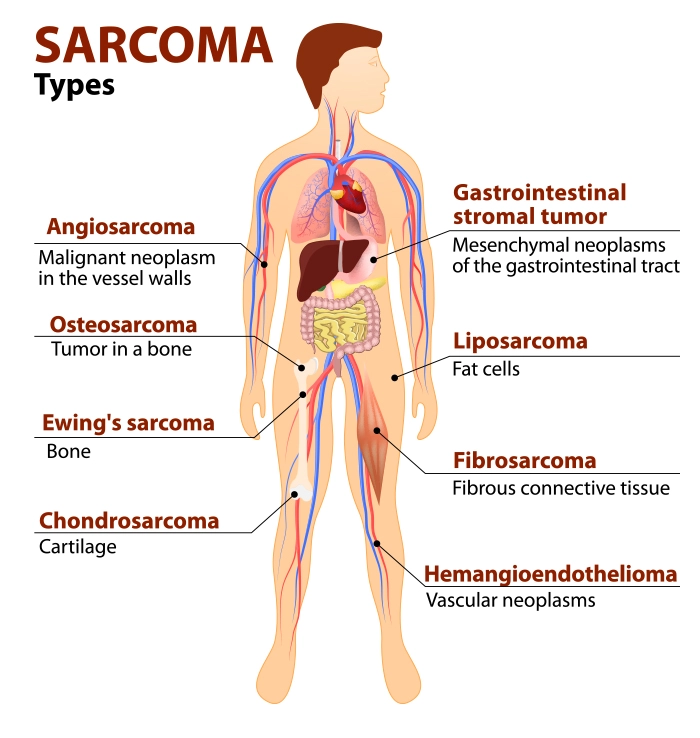
Sarcomas can form anywhere in the body. The most common locations for sarcomas to form are in the arms or legs, but they can also form in the abdomen, chest or head and neck. Some more rare types of sarcomas can even form in the skin.
There are over 100 different types of soft tissue sarcoma. However, a few types make up most cases:
A doctor who diagnoses disease by reviewing material under a microscope (pathologist) reviews your sarcoma tumor material. They will determine the type of sarcoma and give it a score called the “tumor grade.” This score ranges from 1-3 and can be related to the behavior of the sarcoma. Grade 1 sarcomas tend to be slower growing and grade 3 sarcomas tend to grow fast and act most aggressively.